

What to Look for in a Used Car
Knowing what to look for in a used car protects your budget and your safety before you ever sign paperwork. Phoenix’s pre-owned market moves quickly, and every vehicle on it carries a different backstory, whether it came from a single careful owner, an out-of-state trade, or a fleet rotation. Checking vehicle history, inspecting the car in person, and choosing the right sourcing strategy turns that uncertainty into a purchase you can stand behind.
Buying a used car doesn’t have to be overwhelming. Get honest, personalized help from an Auto Broker.
Vehicle History
The primary concern when purchasing a used car is just that—it’s used. Unless you’re buying from a trusted source for pre-owned vehicles, you will need to do your homework. Before beginning this step, you’ll need access to the vehicle identification number (VIN). The license plate or title number will also work, but these are typically only available when buying from a private seller. Reach out to the seller and obtain this information. Once you have a way to identify the vehicle, complete the following research steps.
1. Confirm Recall Compliance
Search the vehicle’s VIN on the National Highway Traffic Safety Administration’s website to see every open recall tied to that car. An unresolved recall can involve anything from a faulty airbag sensor to a fuel system defect, and manufacturers typically cover these repairs at no cost once you own the vehicle. Skipping this step means inheriting a known safety issue the manufacturer already agreed to fix.
2. Review the Accident History Report
Pull a vehicle history report from a service like Carfax to see whether the car has a reported accident on record. A documented collision can strip 10% to 30% of a vehicle’s resale value, even after quality repair work. This single report often surfaces what a walkaround inspection can’t: prior owners, title status changes, and whether the odometer reading lines up with the car’s service history.
3. Check for an Active Warranty
Look for remaining manufacturer or powertrain coverage, especially on newer or low-mileage vehicles. This detail is usually listed right in the vehicle history report. An active warranty can nudge the purchase price up slightly, and it removes the financial risk of an early mechanical failure.
4. Review Maintenance Records
Request service records to see oil change intervals, fluid replacements, and any parts already swapped out. Consistent maintenance history is one of the strongest predictors of how long a used car will last after you drive it home. Gaps in that history call for a closer physical inspection before you commit, since paperwork alone can’t confirm every repair was actually done.
Popular Models in Phoenix
Personal preference should guide your final choice, and popularity carries real, practical benefits once you’re living with the car day to day. Vehicles from well-established, high-volume brands tend to hold up better over the long run simply because so many people own and service them.
1. Widely Available Parts
Popular models from established brands draw from a deep supply of OEM and aftermarket parts, backed by a wide network of mechanics who already know the platform. That combination keeps repair costs down and turnaround times short whenever something eventually needs fixing.
2. Choose Brands with an Active U.S. Presence
Vehicles from manufacturers still operating in the United States give you reliable access to parts, technical support, and trained technicians for the life of the car. Models from discontinued or defunct brands can turn a routine repair into a weeks-long search for a single component.
Signs of Wear and Tear
A clean vehicle history report confirms paperwork accuracy. Physical inspection reveals the wear that paperwork can’t capture, and a test drive shows how the car performs under real driving conditions rather than a showroom idle.
1. Body and Alignment
Run your fingers along the gaps where the doors, hood, and trunk meet the body. Uneven spacing signals a past accident and rushed repair work. Mismatched paint or small bubbles under the surface often point to rust or hurried bodywork, a real concern given how much dust and debris Phoenix vehicles deal with.
2. Brakes, Tires, and Suspension
Press the brake pedal and note any softness or grinding, especially on a low-mileage vehicle where wear should be minimal. Uneven tire wear can flag alignment or suspension trouble, and a fresh set of tires sometimes masks that problem instead of solving it. Hold the steering wheel lightly during your test drive; pulling to one side or vibration at speed usually traces back to alignment or suspension components that need attention.
3. Engine and Transmission Health
Check the engine oil and transmission fluid before you drive. Oil should run clean, and transmission fluid should stay red without a burnt smell. A freshly cleaned engine bay can hide a leak rather than confirm good maintenance, so look closely at hoses and gaskets for residue. Accelerate hard and brake hard during the test drive; strange noises or hesitation under those conditions often stay hidden during a gentle, cautious loop around the block.
How a CLS Auto Broker Changes What to Look for in a Used Car
Everything above takes real time and expertise to do right, and doing it alone usually means visiting multiple dealerships, researching financing on your own, and negotiating a trade-in with a finance manager whose incentives run the opposite direction from yours. A CLS Auto Broker builds that same vetting process into a single, guided transaction.
1. Compare Every Brand in One Sitting
Cross-shopping a Honda CR-V against a Toyota RAV4 usually means two separate dealership visits and two separate sales pitches. Working with a broker who represents no single manufacturer puts honest, side-by-side input on competing models into one conversation, often surfacing options you wouldn’t have cross-shopped on your own.
2. Source Rust-Free Vehicles from Outside Phoenix
Local inspection only evaluates cars already sitting in the Valley. CLS brokers source specific trims and models from outside Arizona, targeting regions with lower rust exposure and cleaner histories, then manage inspection and shipping logistics from purchase through delivery.
3. Combine Financing, Trade-Ins, and Negotiation into One Transaction
A CLS broker evaluates lease versus purchase scenarios, shops your loan across a network of credit unions and national banks, and handles your trade-in or lease return inside the same deal. One point of contact replaces three separate negotiations happening on three separate timelines.
4. Skip the Inspection Marathon with Concierge Delivery
CLS brokers complete the vehicle history check, physical inspection, and negotiation before you’re ever involved, then deliver the fully vetted vehicle and finished paperwork to your home or office for a signing that typically takes under 60 minutes. Your role shifts from inspector and negotiator to final approval.
| Buying Task | Typical DIY Approach | With a CLS Auto Broker |
|---|---|---|
| Comparing brands | Multiple dealership visits | One broker, every brand, one sitting |
| Vehicle sourcing | Limited to local inventory | Nationwide sourcing in rust-free regions |
| Financing | Separate pre-approval and negotiation | Rates shopped across credit unions and banks |
| Trade-in | Negotiated separately with a finance manager | Handled within the same transaction |
| Final paperwork | Hours at the dealership | Under 60 minutes, at your home or office |
CLS Auto Brokers Know What to Look for in a Used Car
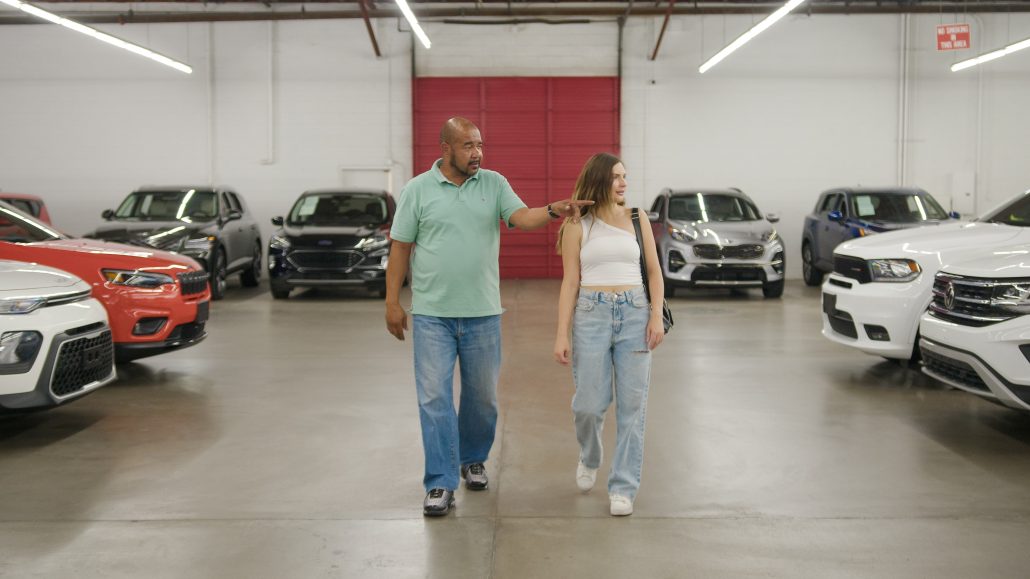
Buying a used car on your own means acting as your own mechanic, negotiator, and finance manager, often in the same afternoon. Centennial Leasing & Sales replaces that workload with a single expert who already knows what to look for in a used car and applies that knowledge directly to your search, giving you a better way to buy.
From vehicle history and physical inspection to financing and delivery, your broker manages every step, so you spend your time driving the car you chose instead of chasing the paperwork behind it.
Ready to start your search?
Reach out to Centennial Leasing & Sales today and let us do the heavy lifting.