

Understanding a Car Dealership’s Hidden Fees
You’ve walked countless lots and gone on more test drives than you can remember while shopping for your new vehicle. You see the light at the end of the tunnel and are almost ready to drive away in your new vehicle. The only problem? It’s come time to discuss the bill, and the number staring back at you is off by a few thousand dollars. The sticker price gave you hope that you found a great deal, but the car dealership used some creative accounting to tack on a few surprise fees.
It is incredibly frustrating, but these showrooms know exactly how to protect their bottom lines. Regulatory groups, including the Federal Trade Commission (FTC), have actively issued deceptive pricing warnings to automotive groups regarding these exact contract padding strategies.
In This Article
- Distinguishing Unavoidable Costs from Artificial Fees
- Tips to Avoid Hidden Fees at Car Dealerships
- The Auto Broker Solution
Distinguishing Unavoidable Costs from Artificial Fees
To protect your budget, it helps to understand that automotive costs fall into two distinct categories. Legitimate government fees (such as title charges, vehicle registration, and regional licensing fees) along with manufacturer costs (like destination charges) are standard across the automotive sector.
Artificial dealer charges, however, are created entirely by the showroom to increase their profit margins. In Arizona, businesses are subject to a Transaction Privilege Tax (TPT), which is a tax charged by the Department of Revenue for operating a business in the state. Because the TPT applies directly to the total proceeds of the tangible vehicle sale, individual dealer service fees are often left untouched by the extra tax burden.
To capitalize on this setup, traditional showrooms frequently separate their operational overhead from the base vehicle cost. This allows the dealership to bring in more revenue on the backend of the transaction while attempting to manage their tax metrics.
Arizona guidelines state that separate dealer fees must be reasonable, so you rarely see a single massive charge. Instead, traditional showrooms apply a method that feels like death by a thousand cuts. These extra costs stack up quickly, so if you do not know what to look for, you will be in for a nasty surprise when you sit down in the finance office. Knowledge is your best protection against hidden car dealership fees. Here is the list of common fees and sales contract padding strategies that you may run into during a traditional vehicle purchase at a dealership.
1. Dealer Document Fee
What is a dealer document fee? A dealer documentation fee, often called a doc fee, is a charge added to a vehicle sale to cover the internal administrative costs of processing titles, registrations, and vehicle paperwork. While some states place strict legal caps on document fees, Arizona does not limit what a dealership can charge, making it a common area for hidden price padding.
2. Dealer Service Fee
A dealer service fee is a catch-all term for costs associated with preparing a vehicle for sale, including pre-delivery inspections, detailing, cleaning, and mechanical reconditioning. These charges are explicitly designed to inflate the dealer’s final profit margins, and traditional salespeople are typically trained not to negotiate on these service lines.
Tired of haggling and fighting hidden car dealership fees? It might be time to ditch the dealership and work with a Phoenix auto broker.
3. Advertising Fees
Advertising is a standard cost of owning a business. If you discover that a dealership is charging you a separate regional or manufacturer advertising fee on your final sales contract, make a point to dispute it. You would not accept a retail store raising the price of a soda at the register to cover their national television commercials. Purchasing a new vehicle is no different.
4. Anti-Theft Fees and F&I “Junk Fees”
The Finance and Insurance (F&I) office is a frequent source of surprise contract additions. Anti-theft fees often cover localized security add-ons like VIN etching, window labeling, or wheel locks. Beyond security, the F&I manager may try to bundle overpriced add-ons into your final contract, including extended warranties, GAP insurance, rustproofing, paint sealants, and even nitrogen-filled tires. While some of these products have standalone value, they are frequently marked up to extreme prices at the dealership. If you are interested in these services, you can often secure them from independent local providers for a much lower cost.
5. Retail Market Adjustments
Market adjustments are arbitrary fees added directly to the window sticker when a specific vehicle model is in exceptionally high demand. Traditional dealerships mark vehicles up well above the Manufacturer’s Suggested Retail Price (MSRP) simply because local inventory is scarce or waitlists are long. These fees are negotiable, and you should always challenge them if a dealer is using local market conditions to inflate your price.
Tips to Avoid Hidden Fees at the Car Dealership
Standard consumer guides typically recommend a highly defensive, adversarial approach to handling showroom padding. Buyers are often told to cross-reference state MVD fee caps, demand full itemized pricing sheets from the sales manager, secure independent credit union pre-approvals before setting foot on a lot, or use the stressful tactic of threatening to walk out of the showroom mid-transaction.
While these defensive tactics can sometimes protect your wallet, they turn car buying into an exhausting negotiation process. For busy professionals, families, and commercial fleet managers who value convenience and time savings, this conflict-heavy framework is an inefficient use of valuable hours.
If you choose to work through a traditional showroom transaction, use these three structural tips to help protect your budget:
- Ask for an Out-The-Door (OTD) Quote: This itemized summary displays the exact final total you will pay for the vehicle, including all asset costs, local taxes, and processing fees. Securing an OTD quote provides complete transparency and allows you to negotiate the single, bottom-line figure rather than arguing over individual, allegedly fixed fees.
- Be Wary of Extras: Showroom finance departments frequently insert physical accessories, protective coatings, and extended service contracts into the final paperwork. These options are generally priced well above market value, and you can easily obtain identical products or services later from independent local providers for a fraction of the cost
- Visit Multiple Dealerships: Collecting identical, itemized OTD sheets for the exact same vehicle trim level from different area sellers effectively neutralizes localized markups. Having multiple physical price sheets in hand gives you the concrete market data required to challenge artificial fee padding directly.
The Auto Broker Solution to Avoiding Hidden Fees
Focusing on how to manually fight individual showroom fees places a massive administrative burden on your shoulders. A more efficient strategy shifts the focus entirely, changing the vehicle acquisition environment to avoid the spaces where hidden fees are created in the first place.
Choosing an independent, brand-agnostic auto brokerage model provides a total operational bypass to the traditional dealership framework. By reframing how vehicles are sourced, financed, and exchanged, a dedicated auto broker structurally eliminates artificial markups through five core strategic mechanisms:
Fleet-Level Cost Structures
Auto brokers operate within high-volume fleet purchasing channels rather than individual retail streams. This commercial relationship grants access to institutional pricing structures that completely omit the retail padding, reconditioning fees, and prep charges that traditional showrooms use to build profit margins.
Elimination of the Traditional F&I Tactic
Because an independent broker manages your transaction from start to finish as a single point of contact, you never enter a separate retail finance office. This structural change eliminates the high-pressure environment where back-end junk fees, marked-up protection packages, and anti-theft upgrades are typically slipped into a contract.
Wholesale Financing Access
Dealership finance departments frequently implement an internal interest rate markup to profit from your loan or lease structure. Independent brokers utilize a centralized network of credit unions and national financial institutions to source wholesale funding rates, passing the direct financial terms straight to you without internal padding.
True Pricing Advocacy
Traditional sales staff are compensated based on the total profitability of the vehicle markup. The auto broker partnership replaces this conflict with complete transparency. Our brokers function as personal consultants, evaluating line-by-line itemization to keep your acquisition completely free of artificial dealer padding.
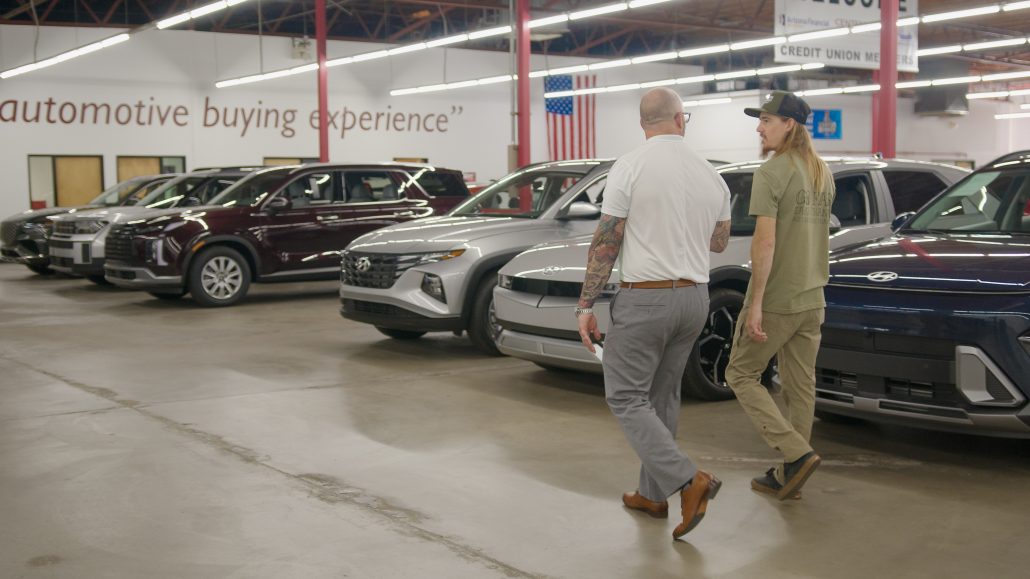
Experience Transparent Vehicle Acquisition at Centennial Leasing & Sales
If you are tired of confrontational showroom tactics, hidden contract padding, and high-pressure finance environments, you are far from alone.
At Centennial Leasing & Sales, our operational philosophy is built entirely on trust, transparency, and personal advocacy. Our independent auto brokers function as your personal vehicle consultants, making a smooth, low-pressure car buying experience our ultimate priority. When you start an automotive conversation with a member of our team, we are not trying to force a quick, transactional sale, we are working to build a lifelong relationship.
We want you to secure the exact vehicle you want at a transparent price that keeps you coming back for life. Reach out to our team today to experience vehicle procurement the way it was meant to be.